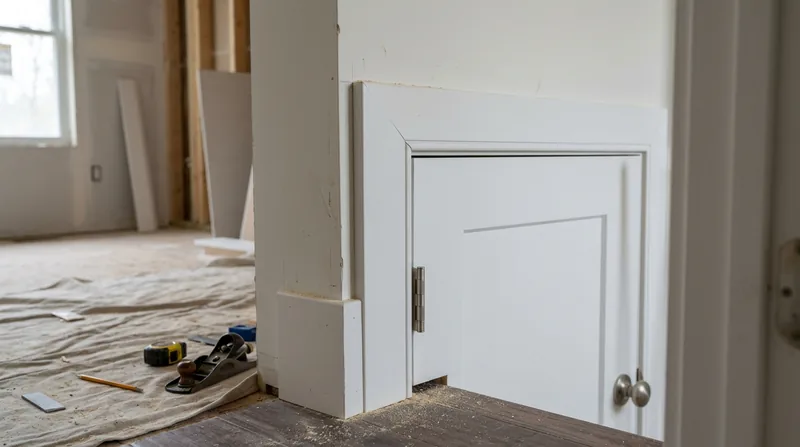




Pittsburgh's Victorian rowhouses, Tudor Revivals, and post-war brick homes demand crown molding and baseboard installation that respects their original character while meeting modern standards. The steep hillside terrain of neighborhoods like Polish Hill, the South Side Slopes, and Squirrel Hill means rooms with settled sills, uneven walls, and plaster cracks that require precision scripting and coped joints to fit seamlessly. Our carpenters install crown molding, baseboards, and chair rail with clean caulk lines and period-matched profiles, or crisp modern detail if that's the direction you're heading. We work in homes built before 1940 where original trim has warped or been lost, and in newer construction where the install matters as much as the material. This page explains what the work entails, why Pittsburgh homes benefit from it, and what to expect when you're ready to move forward.
Why Crown Molding and Baseboard Installation Matters in Pittsburgh's Older Homes
Pittsburgh's housing stock tells a story in trim and detail. Most of our city's homes predate 1940, and the original crown molding, baseboards, and wainscoting are often original wood, warped by the freeze-thaw cycles that dominate our humid continental climate. Water damage, settling, and decades of seasonal movement mean that old trim no longer sits flat against walls or meets at clean angles. Replacing or restoring this trim isn't just cosmetic, it's about protecting walls from moisture infiltration and finishing rooms to their full potential. A properly installed baseboard, coped at inside corners and sealed with clean caulk, keeps water and debris from collecting where walls meet the floor, a real concern in Pittsburgh's damp spring months.
- Coped joints at inside corners eliminate gaps that trap dust, moisture, and pest entry points.
- Clean caulk lines seal the junction between trim and wall, preventing water from wicking into drywall or plaster.
- Scribing and fitting trim to uneven walls and settled sills is standard in Pittsburgh's older homes, not an extra.
- Period-matched Victorian and Second Empire profiles preserve the architectural integrity of homes in the Mexican War Streets and Manchester neighborhoods.
- Modern, crisp baseboard and crown detail complements contemporary finishes in renovated lofts and updated family homes.
Getting the detail right the first time means your trim stays tight for decades, not splitting or pulling away as the house continues to shift.
Key info: Pittsburgh homes built before 1940 commonly sit on settled foundations and uneven walls. Crown molding and baseboard must be scribed and coped to fit those conditions, not forced to fit square walls. This is not a defect in the home, it's a normal condition that demands skilled installation.
For more on protecting your home's interior finishes, see our finish and trim carpentry service page.
How We Install Crown Molding and Baseboard in Pittsburgh Homes: Our Process
We begin every job with a site visit to measure the room, assess wall conditions, and identify any plaster cracks, settled sills, or uneven surfaces that will affect the install. We source or match the profile you want, whether that's a reproduction Victorian crown, a simple modern baseboard, or a chair rail to tie rooms together. Our carpenters then cut each piece on site, scribing where walls are out of square and coping inside corners so joints sit tight without gaps. We use finish nails and construction adhesive, then caulk and sand all lines before final paint or stain.
- We measure and assess the room to identify wall settlement, plaster cracks, and uneven surfaces before ordering materials.
- We source trim that matches existing profiles or delivers the modern look you've chosen for the space.
- We cut, fit, and scribe each piece on site to account for walls that are not square or settled foundations.
- We cope inside corners so joints close tight without visible gaps or separation over time.
- We fasten with finish nails and construction adhesive, caulk all lines with paintable caulk, and sand smooth before final finish.
- We coordinate with your painter or stain the trim to match existing woodwork in the home.
This method takes longer than nailing straight pieces to square walls, but it's the only way to do the job right in Pittsburgh's older homes where settlement and plaster cracks are the rule, not the exception.
Local example: A rowhouse in Lawrenceville had original 4-inch baseboard and 5-inch crown molding from the 1920s. The walls had settled 1.5 inches over a century, and plaster was cracked throughout. We reproduced the profile in modern pine, scribed every piece to the wall contour, and coped all inside corners. The result was indistinguishable from the original, and the install took three days because precision matters in old homes.
Related work: if your baseboards or crown are damaged by water or settling, our finish carpentry service covers repair or replacement of any interior trim.
| Approach | Description | Best for |
|---|---|---|
| Reproduction Profile | Match existing Victorian, Second Empire, or Colonial crown and baseboard using historical photographs or samples from the home. | Homes in the Mexican War Streets, Shadyside, or other neighborhoods where original detail is intact or documented. |
| Modern Crisp Detail | Install simple, clean baseboard and crown in 3 to 5-inch profiles with tight joints and minimal shadow lines. | Contemporary renovations, open-plan homes, and rooms where a minimalist aesthetic is the goal. |
| Coped Joint Installation | Cut inside corners with a coping saw so profiles nest together, eliminating gaps and supporting wood movement. | All Pittsburgh homes, especially older properties where walls settle and plaster cracks over decades. |
| Scribing and Fitting | Trace wall contours and uneven surfaces onto trim, then cut and fit each piece to follow the wall rather than forcing trim to fit square. | Homes with settled foundations, uneven plaster, and walls that are not square, which describes most pre-1940 Pittsburgh residences. |
| Chair Rail and Wainscoting | Install 3 to 4-foot chair rail above baseboard, optionally with wainscoting panels or bead board below to protect plaster and add detail. | Dining rooms, hallways, and bathrooms in period homes where damage to plaster is common or where the look is desired. |
Crown Molding and Baseboard Installation Cost in Pittsburgh: What to Expect
Crown molding and baseboard installation in Pittsburgh starts at $450 for a small room and scales with the square footage of walls, the complexity of the profile, and the condition of the surfaces you're installing on. A 12-by-14-foot bedroom with straight walls and no obstacles typically runs $600 to $900 for baseboard and crown combined. Larger homes, rooms with multiple windows and doors that interrupt the trim line, or walls that require extensive scripting to fit settled foundations will cost more. If your walls are severely out of square, plaster is crumbling, or you're installing period-matched detail that requires custom milling, we assess the scope on site and provide an estimate before we commit to a price.
The factors that move the cost up are straightforward: room size, number of inside and outside corners (which require coped or miter joints), accessibility, and the profile itself. Simple baseboard in a new home with square walls is faster and cheaper than reproducing Victorian crown in a 1920s rowhouse with settled walls. We're happy to walk through the variables on a call at (412) 866-2637 or during a free estimate.
For a detailed pricing overview and examples of other trim and finish carpentry work, visit our pricing page.
Crown Molding and Baseboard Installation Near Me: What Pittsburgh Homeowners Should Know When Hiring
Finding a carpenter you trust to install trim in your home starts with getting multiple estimates and understanding what you're paying for. Call at least two or three shops in your area, ask them to visit the room, and compare not just price but the detail of their estimate. A good estimate tells you the profile being installed, the method (coped vs. miter, scribed vs. square), the finish (primer and paint, stain, or bare), and any wall prep required before the trim goes up. Ask for references from recent jobs in Pittsburgh or nearby suburbs, and don't hesitate to call those homeowners and ask how the work held up.
- Get written estimates from at least two carpenters that specify the profile, installation method, and finish included in the price.
- Ask whether the estimate covers wall prep, caulking, and final sand or if those are extras, because they affect the total cost.
- Request references from homes in Pittsburgh or nearby areas and follow up with those homeowners about the quality and durability of the work.
- Verify that the carpenter is fully insured and ask to see the certificate of insurance before work begins.
- Confirm the timeline, including any coordination with your painter or stain contractor, so the trim is finished on schedule.
- Understand the payment terms, whether it's a deposit, progress payment, or final payment on completion.
Hiring a local carpenter who knows Pittsburgh's older homes and settlement patterns is worth the effort, because trim that's installed right will stay tight for decades.
Ready to get started? Contact us for a free estimate, or call (412) 866-2637 to discuss your project.
Crown Molding & Baseboard Installation in Pittsburgh: Pricing Guide
| Service | Price | Details |
|---|---|---|
| Small room, simple baseboard | Starting at $450 | Single-room baseboard installation, straight walls, no coping or scribing required, includes finish nails and caulk |
| Medium room, baseboard and crown molding | Starting at $750 | Typical 12-by-14-foot bedroom with baseboard and crown, coped inside corners, scribed to settled walls, includes caulk and sand |
| Large home, multiple rooms, or reproduction profile | Starting at $1,200 | Multi-room installations, period-matched Victorian or Second Empire detail, extensive scribing, or complex wall conditions require on-site assessment |
| Chair rail and wainscoting | Starting at $600 | Chair rail plus wainscoting panels or bead board, installed to protect plaster and add architectural detail to dining rooms or hallways |
| Travel | Included | No separate mileage or call-out fee within Pittsburgh and surrounding Allegheny County service areas |
| Free estimate | No charge | Site visit, measurement, and written estimate provided within 24 hours, no obligation to book work |
Indicative pricing, the exact cost depends on square footage, finish, and site access. Free personalized estimate within 24h at (412) 866-2637.


