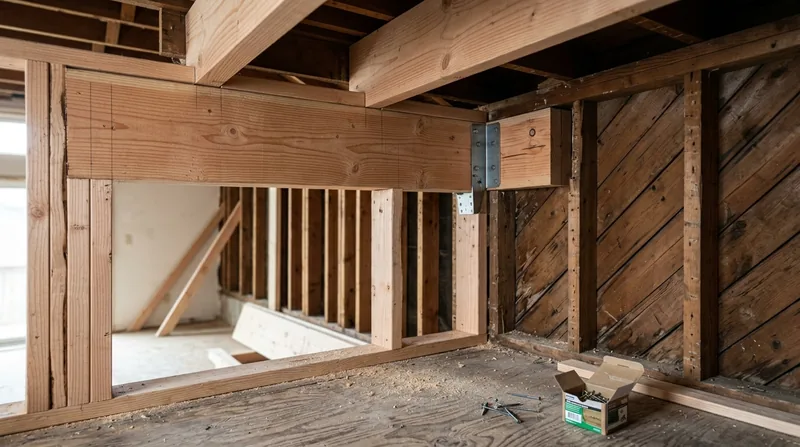




Pittsburgh's steep hillside neighborhoods, from the South Side Slopes to Polish Hill, are built on wood-frame homes that have settled and shifted through a century of freeze-thaw cycles. Winter ice and spring melt work into sill plates, rim joists, and exterior trim, opening gaps where water finds its way into the framing. Wood rot and dry rot repair in Pittsburgh is not cosmetic work, it is structural maintenance that stops decay before it reaches the floor joists and beams that carry your house. We cut out the softened wood, treat the surrounding framing, and rebuild with rot-resistant lumber, a permanent repair that restores the structural integrity of your home. This page explains what wood rot is, why it matters in Pittsburgh's climate, how we approach the work, and what you should expect to invest.
Why Wood Rot and Dry Rot Repair Matters in Pittsburgh's Climate
Pittsburgh sits in a humid continental climate with cold, snowy winters and humid summers. Freeze-thaw cycles are relentless: water enters wood in fall, freezes and expands in winter, thaws in spring, and the cycle repeats. Older homes, especially the pre-1940 rowhouses and brick-and-frame structures common in Shadyside, Squirrel Hill, and Lawrenceville, have sill plates and rim joists that have absorbed moisture for decades. Unlike the dry-rot pathology of California's fog belt, Pittsburgh's rot is driven by seasonal water infiltration and poor drainage against foundations. Left unaddressed, rot in the sill plate or floor joist can undermine the bearing capacity of the wall above it and create conditions for further decay in the subfloor.
- Freeze-thaw cycles force water into framing gaps and siding seams, accelerating decay in sill plates and rim joists.
- Older homes with settled foundations and cracked mortar allow water to migrate upward into the wood structure.
- Poor drainage against hillside foundations in neighborhoods like Mount Lebanon and Peters Township creates standing moisture that feeds rot.
- Early intervention stops the decay before it reaches load-bearing joists and requires expensive floor or beam replacement.
Addressing rot early saves money and prevents the structural damage that forces a much larger repair down the road.
Key info: The Pittsburgh Building Department requires permits for any structural repair involving floor joists, sill plates, or load-bearing walls. We work with your local building department to ensure all work meets code. Verify permit requirements with your municipality before starting; thresholds and rules vary across the city and suburbs.
For more information on structural repairs, visit the floor joist and subfloor repair page, which covers the next stage of decay if rot reaches deeper into the framing.
How We Repair Wood Rot and Dry Rot in Pittsburgh Homes
Our approach is diagnostic and methodical. We identify the source of moisture, cut out all softened and decayed wood, treat surrounding framing with a borate solution to arrest any incipient decay, and rebuild the damaged section with pressure-treated lumber or rot-resistant species. We do not replace wood unnecessarily. If the wood is sound and the decay is limited to a few inches of sill plate or trim, we repair it. If the rot has spread through a structural member or the wood is too compromised to bear load, we replace it. This honest assessment saves money and keeps your home safe.
- We inspect the damage zone and trace the moisture source, which is often poor drainage, a cracked foundation, or failed exterior caulk.
- We remove all decayed wood using hand tools and chisels, exposing the boundary between soft and sound framing.
- We apply a borate wood preservative to the surrounding framing to stop dormant decay and prevent future rot.
- We rebuild the damaged section with pressure-treated lumber, rot-resistant redwood, or Douglas fir, depending on the application and visibility.
- We address the moisture source, whether that means improving drainage, resealing exterior gaps, or coordinating with a foundation specialist.
The same carpenters who diagnose the work perform the repair, so you get consistent quality and accountability from start to finish.
Real example: A 1925 brick rowhouse on Pittsburgh's South Side Slopes developed rot in the rim joist where the brick had settled and cracked. Water was wicking up into the wood frame above the foundation. We removed the decayed rim joist over a 4-foot span, treated the sill plate and band joist above it, and sistered in a new pressure-treated rim joist. We also repointed the brick and sealed the crack to stop future water entry. The repair cost less than half what a full floor joist replacement would have, and the structure was restored to original bearing capacity.
If the decay has reached the floor joists themselves, see our floor joist and subfloor repair service for more detail on how we address deeper structural damage.
Wood Rot Repair Methods and When to Use Each
| Approach | Description | Best for |
|---|---|---|
| Localized decay removal and rebuild | Cut out softened wood, treat surrounding framing, rebuild damaged section with pressure-treated lumber or rot-resistant species. | Rot confined to sill plate, rim joist, or exterior trim with sound wood nearby. |
| Sistering and reinforcement | Install a new structural member alongside or beneath the damaged one to restore load-bearing capacity without removing the original. | Floor joists or rim joists where the decay is partial and the member can be reinforced rather than replaced. |
| Full member replacement | Remove and replace an entire structural member (sill, joist, header, or stud) with new pressure-treated or rot-resistant lumber. | Rot has compromised the structural integrity of the member or decay spans more than half its length. |
| Borate treatment and preventive sealing | Apply borate wood preservative to sound wood adjacent to decay and seal exterior gaps and cracks to stop future moisture entry. | Early-stage rot, incipient decay, or preventive work in high-risk areas like sill plates and rim joists. |
The method we recommend depends on the extent of the decay, the structural importance of the member, and the cost-benefit of repair versus replacement. We explain that reasoning clearly in our estimate.
Wood Rot and Dry Rot Repair Cost in Pittsburgh: What to Expect
Wood rot repair in Pittsburgh starts at around $650 for a localized patch of decayed sill plate or rim joist, including removal, treatment, and rebuild. Costs rise with the extent of the decay, the accessibility of the damaged area, and whether the moisture source requires additional work to address. A rim joist repair in an accessible basement might run $1,200 to $2,500. A sill plate repair on an older rowhouse with a tight foundation and settled brick can run $2,000 to $4,000 or more because access is difficult and the decay is often more extensive than the surface suggests. Structural repairs that require permits, temporary support, or involvement of a licensed structural engineer cost more and take longer.
The best way to understand cost is to get an on-site estimate. We inspect the damage, identify the moisture source, determine whether repair or replacement is the right call, and give you a clear, itemized price. Every home and every decay pattern is different. Two rowhouses on the same block can have very different repair costs because one has accessible foundation access and the other does not.
See our full pricing overview for more detail on how we structure estimates and what factors move the cost up or down.
Wood Rot and Dry Rot Repair Near Me: What Pittsburgh Homeowners Should Know When Hiring
When you call a carpentry shop for a wood rot estimate, look for someone who will diagnose the moisture source, not just cut and patch. Ask whether they recommend repair or replacement and why. Check that they are fully insured and will work under a written contract. Get 2 to 3 estimates before you decide. A low estimate that promises to fix the rot without addressing moisture is a red flag. Ask for references from recent jobs in your neighborhood. Older Pittsburgh neighborhoods like Mount Lebanon, Upper St. Clair, and Bethel Park have similar foundation and framing challenges, so a contractor familiar with your area will understand the pathology faster.
- Verify that the contractor is fully insured and can provide a current certificate of insurance upon request.
- Ask whether permits are required for the scope of work and whether the contractor will obtain them or coordinate with your local building department.
- Request references from at least two completed jobs in Pittsburgh or your immediate area.
- Get the estimate in writing, with a clear description of what is being repaired, what materials will be used, and whether the moisture source is addressed.
- Understand that the lowest price is not always the best value if it skips the root cause of the rot.
We are happy to walk you through the estimate process and answer questions about the work before you commit. Call us at (412) 866-2637 for a free estimate. We respond within 24 hours and can often schedule an inspection within a few days.
Wood Rot & Dry Rot Repair in Pittsburgh: Pricing Guide
| Service | Price | Details |
|---|---|---|
| Small localized repair | Starting at $650 | Decay confined to sill plate or trim, limited access, sound framing nearby, no permit required |
| Moderate rim joist or sill repair | Starting at $1,500 | Decay spans 3 to 6 feet, requires temporary support or bracing, borate treatment of surrounding framing included |
| Structural repair with permit | Starting at $3,000 | Floor joist sistering, load-bearing wall framing, or full member replacement; includes permit coordination and structural documentation |
| Complex or extensive decay | On estimate | Decay spans multiple members, moisture source requires foundation or exterior work, or structural engineer consultation needed |
| Travel and site visit | Included | Free within Pittsburgh and surrounding Allegheny County service areas, no mileage surcharge or travel fee |
| Estimate | Free | On-site inspection and written quote with no obligation to book; response within 24 hours at (412) 866-2637 |
Indicative pricing, the exact cost depends on square footage, finish, and site access. Free personalized estimate within 24h at (412) 866-2637.


