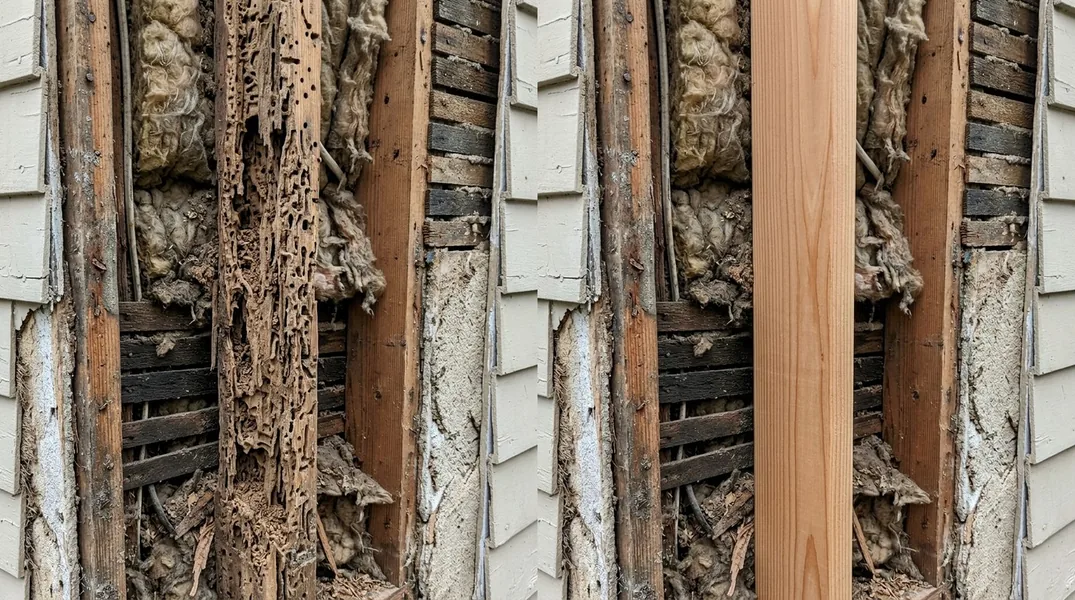
Dry Rot vs Termite Damage: The Critical Difference
If you own a home in Pittsburgh, you've probably worried about wood damage at some point. The challenge is that dry rot and termite damage can look surprisingly similar to an untrained eye, yet they require completely different treatment approaches. Understanding the distinction between these two wood-destroying problems is essential before you call a contractor or invest money in repairs.
Dry rot is a fungal disease that occurs when wood loses moisture and begins to decay from the inside out. Termites, on the other hand, are insects that actively eat wood as a food source. While both can compromise the structural integrity of your home, the way they damage wood and the urgency of treatment differ significantly. Misidentifying the problem could lead you to spend money on the wrong solution, leaving your home vulnerable to further damage.
What Does Wood Rot Look Like: Identifying Dry Rot
Dry rot typically appears as wood that is darkened, cracked, and brittle. When you press on affected wood with a screwdriver or similar tool, it crumbles easily rather than splintering. The wood often shrinks and may develop a distinctive cubical cracking pattern, where the surface splits into cube-like sections. In advanced stages, the wood becomes so soft and powdery that it practically disintegrates under pressure. You might also notice a musty, earthy smell near affected areas, which indicates active fungal growth.
One key visual indicator of dry rot is the presence of fruiting bodies or mycelium, which appear as white, cotton-like strands or gray-brown fruiting structures on the wood surface. Dry rot thrives in damp, poorly ventilated areas, so pay special attention to basements, crawl spaces, around plumbing, and areas affected by water intrusion. The fungus spreads through the wood grain, which means the damage often extends deeper than what you can see on the surface. This is why professional assessment is crucial when you suspect dry rot in your Pittsburgh home.
Signs of Termite Damage in Wood: What to Look For
Termite damage presents differently from dry rot. Termites hollow out wood from the inside, leaving a thin shell of wood on the surface that may appear intact. This is why termite damage is often discovered only when the wood collapses or when a homeowner notices the telltale signs. If you tap on wood that has termite damage, it sounds hollow, and you may see small exit holes or mud tubes running along the surface of the wood or foundation. These mud tubes are constructed by subterranean termites as protective tunnels between their colony and their food source.
Another distinguishing feature of termite damage is the presence of sawdust-like droppings called frass near damaged wood. Unlike dry rot, which creates a musty smell, termite-infested wood may have a slightly sweet or earthy odor. Termites also leave behind visible damage patterns that follow the grain of the wood in a more linear fashion. You might notice blistering paint, buckling wood, or sagging floors and ceilings in areas where termite colonies have been feeding for extended periods. Because termites are active pests, you may occasionally spot the insects themselves, particularly during swarming season in spring.
Key Differences in Wood Damage Patterns and Progression
The progression and spread of dry rot versus termite damage follow different patterns. Dry rot spreads through airborne spores and through direct contact with infected wood. It requires moisture to thrive, so it tends to concentrate in specific problem areas like basements or areas with water leaks. Once you address the moisture problem, dry rot stops spreading, though the damage it has already caused remains until repaired. The fungus can spread across several feet if conditions are right, but it is geographically limited to where moisture is present.
Termite damage, by contrast, spreads based on the size and activity level of the colony. A mature termite colony can consume a significant amount of wood in a relatively short time. Unlike dry rot, which requires moisture, termites can cause damage even in relatively dry wood, particularly if they maintain their mud tubes and protected pathways. The damage pattern tends to follow wood grain and structural elements, creating galleries and tunnels throughout the wood. Termite infestations can spread to multiple areas of your home if left unchecked, making early detection and professional intervention even more critical.
When to Call a Professional: Wood Rot & Dry Rot Repair Near Me
If you suspect either dry rot or termite damage in your home, professional assessment is the safest course of action. While some homeowners attempt DIY inspections, a trained carpenter or pest professional can accurately identify the problem, assess the extent of damage, and recommend the appropriate solution. For Wood Rot & Dry Rot Repair, Pittsburgh Carpentry brings decades of experience identifying and treating fungal wood decay. We can determine whether the damage is limited to surface wood or extends deep into structural elements like floor joists, beams, or load-bearing walls.
The type of repair needed depends entirely on the correct diagnosis. Dry rot repair may involve removing affected wood, treating remaining wood with fungicide, and addressing the underlying moisture issue. Termite Damage Repair typically requires pest control intervention followed by structural repairs to replace compromised wood. In some cases, particularly when structural integrity is compromised, you may need Floor Joist & Subfloor Repair or even Beam Replacement & Load-Bearing Wall Removal. Don't wait to get a free estimate if you notice any suspicious wood damage. Call Pittsburgh Carpentry at (412) 866-2637 to schedule an inspection.
Cost and Timeline: What to Expect for Repairs
The pricing for wood damage repairs varies significantly based on the type of problem, the extent of damage, and the structural elements involved. A small dry rot repair in a localized area might cost a few hundred dollars, while extensive termite damage affecting multiple structural components could run into the thousands. The scope of work depends on whether the damage is cosmetic, affecting only surface wood, or structural, compromising the integrity of joists, beams, or foundation elements.
Timeline also depends on the severity of the problem. Minor repairs might be completed in a day or two, while major structural work could take several weeks. The good news is that addressing the problem promptly typically costs less than waiting for damage to spread. If you have questions about what your specific repair might cost, Pittsburgh Carpentry is happy to provide a detailed estimate after a thorough inspection. Contact us at (412) 866-2637 or reach out through our website to discuss your situation and get a clear understanding of the work required and the investment needed.
Looking for a professional carpentry contractor in Pittsburgh? Pittsburgh Carpentry responds fast for all your carpentry needs.
Get a Free QuoteOur services: Wood Rot & Dry Rot Repair · Termite Damage Repair · Floor Joist & Subfloor Repair