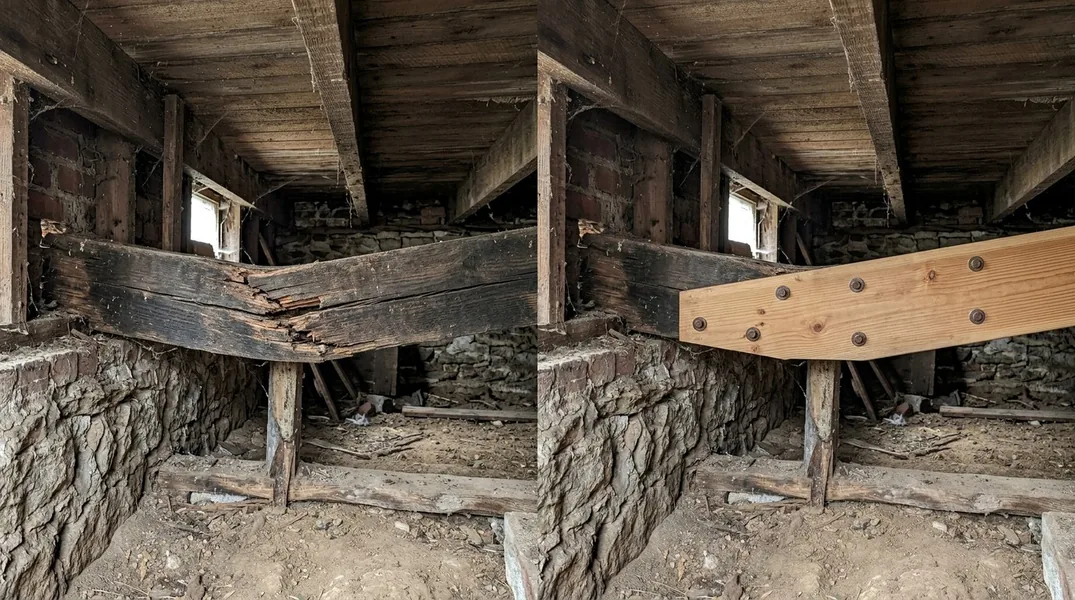
Why Is My Floor Sagging? Common Causes in Older Pittsburgh Homes
If you own an older home in Pittsburgh, you've probably noticed that certain floors feel slightly uneven or dip in the middle of a room. This isn't just an annoyance, it's your home telling you something needs attention. Sagging floors are one of the most common structural complaints we hear from homeowners, especially those living in historic neighborhoods built on Pittsburgh's famous hillsides.
The primary culprits behind sagging floors fall into a few categories. First, there's foundation settlement, particularly common in homes built on slopes or clay soils that shift over decades. Second, and very common in older Pittsburgh homes, is Wood Rot & Dry Rot Repair issues that weaken the structural integrity of floor joists and support beams. Third, undersized or damaged floor joists simply cannot support the weight of the home anymore, especially if the home has been modified or if water damage has compromised the wood. Finally, pest damage from termites or carpenter ants can hollow out structural members, leaving them unable to bear loads.
Understanding the root cause is critical because it determines whether you need a simple joist repair or a more comprehensive foundation and structural solution. Many homeowners assume their sagging floor is minor, but ignoring the problem allows it to worsen, potentially affecting the safety and resale value of your home.
Foundation Issues and Hillside Properties: A Pittsburgh Reality
Pittsburgh's topography is both beautiful and challenging for homeowners. Many properties sit on hillsides or are built on sloping terrain, which creates unique foundation stresses that flat-land homes never experience. As soil shifts, settles, or erodes over time, foundations crack, tilt, or sink unevenly. When a foundation moves, the floor system above it moves too, creating that telltale sag.
Older homes in neighborhoods like Shadyside, Squirrel Hill, and Mount Washington were often built with stone or brick foundations that lack the reinforcement of modern concrete. These foundations are more susceptible to cracking and shifting, especially in Pittsburgh's freeze-thaw climate where water seeps into tiny cracks, freezes, expands, and causes further damage. The combination of hillside pressure and age makes foundation-related sagging particularly prevalent in Pittsburgh homes built before the 1950s.
If your sagging floor is caused by foundation movement, you may also notice cracks in basement walls, doors that stick or won't close properly, or gaps between walls and floors. These are all signs that the foundation itself needs professional evaluation. In some cases, foundation repair specialists use hydraulic jacks to stabilize and lift the structure, while in others, additional support posts or piers are installed to prevent further settlement.
Water Damage, Rot, and Weakened Floor Joists
Water is wood's enemy, and Pittsburgh's humid climate and older homes with aging gutters and roofs create perfect conditions for moisture problems. When water leaks into a basement, crawlspace, or attic, it soaks into floor joists and beams. Over months and years, this moisture triggers rot, turning solid wood into a soft, crumbly material that cannot support weight. This is where Floor Joist & Subfloor Repair becomes essential.
Dry rot and wet rot are both serious threats. Dry rot spreads quickly through wood and can affect joists that aren't even in direct contact with water. It thrives in damp, poorly ventilated spaces like crawlspaces and basements. Wet rot develops more slowly but is just as destructive, creating soft spots that eventually collapse under the weight of the house. Both types of rot are invisible until the damage is advanced, which is why many homeowners don't realize their floors are sagging until the problem is severe.
The solution typically involves removing the damaged wood and installing new joists or reinforcing existing ones through a process called sistering. Sistering floor joists means fastening a new, strong piece of lumber alongside a weakened joist to restore load-bearing capacity. This technique is far less invasive than complete joist replacement and is often the most cost-effective repair method. However, the underlying moisture problem must also be addressed, whether that means improving drainage, fixing leaks, or installing a sump pump in the basement.
Sistering Floor Joists: How the Repair Works
Sistering floor joists is one of the most effective and practical solutions for sagging floors caused by damage or undersized joists. The process involves selecting a new joist (typically pressure-treated lumber or engineered lumber) that matches the size and grade of the existing joist, then fastening it securely alongside the damaged or weak joist. The two joists work together as a single structural unit, effectively doubling the strength.
The work requires careful planning and precision. A qualified carpenter must first expose the joists, assess the damage, and determine how much of the joist needs reinforcement. Sometimes the entire length of the joist is sistered, while other times only the damaged section requires support. Fastening is done with structural screws or bolts spaced every 16 inches along the length, creating a bond strong enough to transfer loads between the old and new members. In some cases, temporary support posts are installed during the work to ensure the floor doesn't sag further or cause damage to walls and finishes above.
One advantage of sistering is that it preserves the existing joist, avoiding the mess and cost of complete removal. It's also typically faster than replacement, meaning less disruption to your home. The downside is that it only works if the existing joist still has some structural integrity. If the joist is severely rotted or damaged throughout, replacement becomes necessary, which is where Beam Replacement & Load-Bearing Wall Removal services may come into play if main support beams are involved.
Sagging Floor Repair Cost in Pittsburgh: What to Budget
The pricing for sagging floor repair varies widely depending on the underlying cause, the extent of damage, and the repair method chosen. A simple sistering project on one or two joists might cost between $2,000 and $5,000, while more extensive repairs involving multiple joists, beam replacement, or foundation work can easily exceed $15,000 or more. The key is getting an accurate diagnosis first, because you can't budget properly without knowing what you're really dealing with.
Several factors influence final cost. The accessibility of the joists matters greatly, if they're in a finished basement or crawlspace, more work is required to expose them. The length of the repair also affects price, a 15-foot joist costs more to sister than a 10-foot joist. Material costs have risen in recent years, and Pittsburgh-area labor rates reflect the local market and the specialized nature of structural carpentry. If the repair requires addressing moisture problems like installing drainage systems or fixing roof leaks, those costs add up quickly.
Many homeowners worry about cost and delay repairs, but this is false economy. A sagging floor that worsens can eventually cause structural failure, damage to walls and ceilings, cracking of plaster or drywall, and even safety hazards. Catching and fixing the problem early, when only one or two joists are affected, costs far less than waiting until half the floor system is compromised. That's why getting a professional inspection and free estimate is the smartest first step. Pittsburgh Carpentry can evaluate your specific situation and provide an honest assessment of what's needed and what it will cost.
When to Call a Professional: Signs Your Floor Needs Repair
Not every slightly uneven floor requires emergency repair, but certain warning signs should prompt you to call a professional right away. If you notice a significant dip or sag that's visible to the naked eye, or if the sag is getting worse over time, that's a red flag. Similarly, if you see water stains on joists or subfloors, smell musty odors in the basement or crawlspace, or notice soft or spongy wood when you press on joists, rot is likely present and repair is needed soon.
Other indicators include doors that suddenly stick or won't close, cracks appearing in basement walls or first-floor ceilings, or visible gaps between walls and floors. If you have an older home in Pittsburgh and you've never had the foundation and floor system professionally inspected, now is the time. Many structural problems develop slowly and silently, only becoming obvious when damage is advanced. A professional inspection can catch issues early, when repairs are simpler and less expensive.
Pittsburgh Carpentry has decades of experience diagnosing and repairing sagging floors in older homes throughout the region. We understand the unique challenges posed by Pittsburgh's topography, climate, and aging housing stock. If you're concerned about your floors, call us at (412) 866-2637 or reach out online to schedule your free estimate. We'll inspect your home thoroughly, explain what we find in plain language, and give you realistic options and pricing so you can make an informed decision.
Looking for a professional carpentry contractor in Pittsburgh? Pittsburgh Carpentry responds fast for all your carpentry needs.
Get a Free QuoteOur services: Wood Rot & Dry Rot Repair · Termite Damage Repair · Floor Joist & Subfloor Repair