Carpenter in Pittsburgh, PA: Wood Rot, Structure & Finish Work
Pittsburgh Carpentry is a local residential carpentry shop serving homeowners across Pittsburgh and the surrounding areas, including Mount Lebanon, Bethel Park, Upper St. Clair, and Peters Township. We work on the full range of wood carpentry: structural repair of rot and insect damage, floor joists and subfloor work, framing and load-bearing alterations, and finish carpentry from trim and doors to custom built-ins and railings. We are the same carpenters on every job, and we know the building stock here: Victorian rowhouses climbing the South Side Slopes, brick and frame homes throughout Polish Hill and the North Side neighborhoods, Tudor and Colonial homes in Shadyside and Squirrel Hill, and the working-class frame stock and post-war brick ranches that fill Bloomfield, Lawrenceville, and the South Hills.
Much of Pittsburgh's housing was built before 1940, and the freeze-thaw cycles of our humid continental winters, combined with the steep terrain and settled foundations that are the norm rather than the exception, create real stresses on wood framing, sills, and exterior members. When homeowners search for a carpenter near me in Pittsburgh who understands these conditions and can read the difference between cosmetic surface wear and structural failure, we are here to help. Call (412) 866-2637 or request a free wood rot inspection to discuss what you are seeing.
Why Wood Fails in Pittsburgh, and How We Read It
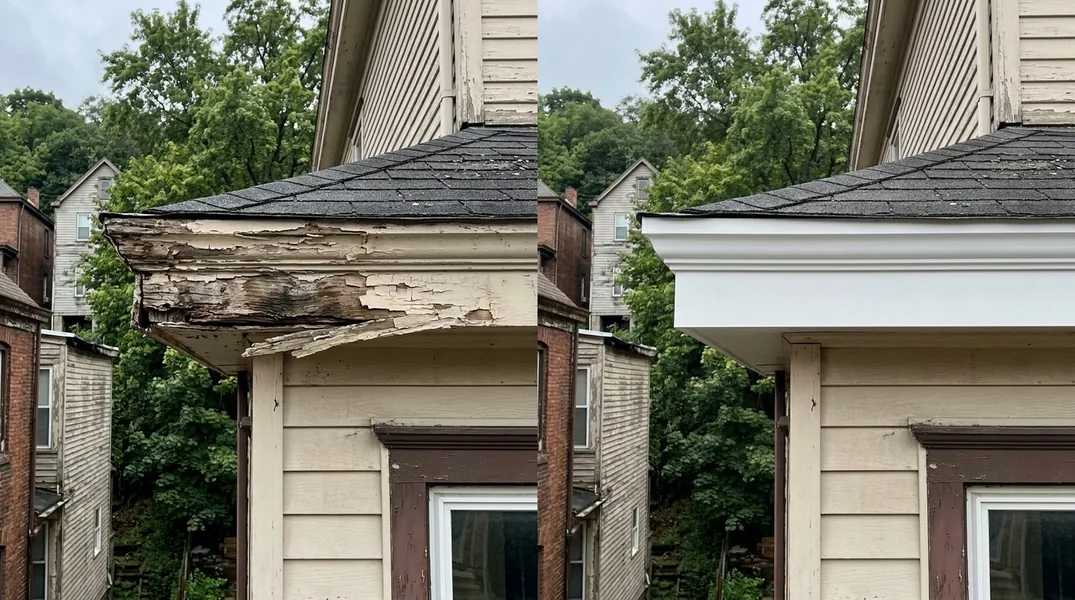
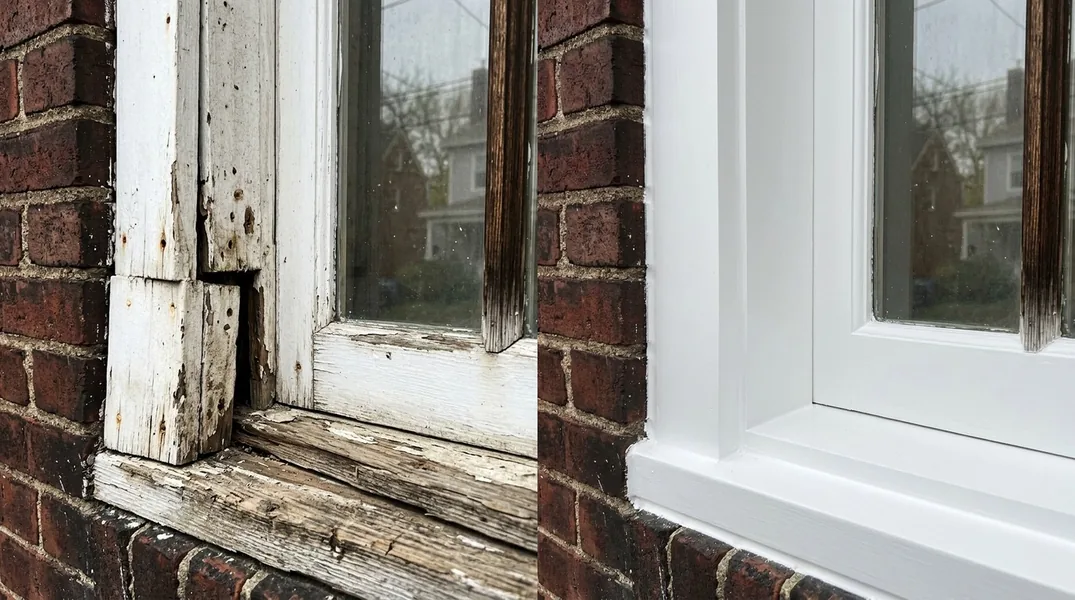
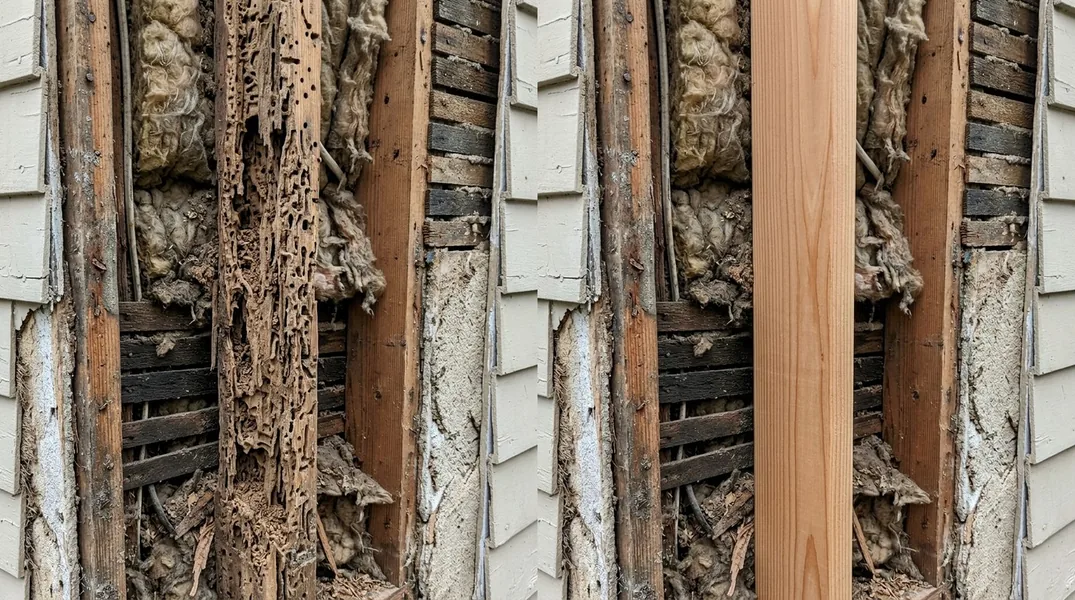
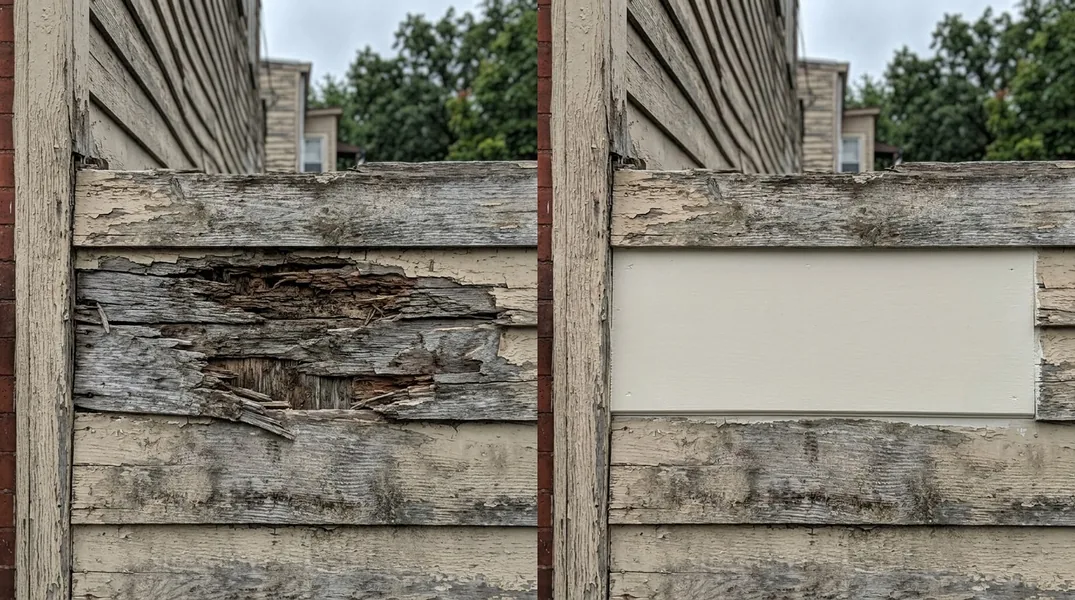
Wood fails here in three primary ways, each driven by the local climate and building stock. Dry rot is a fungus that lives in wood kept continuously damp but not waterlogged. Our humid summers, freeze-thaw cycles, and the way water sits in sills, window frames, and fascia boards create exactly the conditions it needs. Wet rot settles into sill plates, thresholds, and deck ledgers where standing water or chronic seepage has nowhere to drain. Termite and beetle damage is different: the insects hollow out the interior of a framing member while the paint film on the surface stays intact, so a member can look sound from across the room and be structurally compromised where it bears load.
Reading rot honestly means more than a visual inspection. We probe to find where sound wood begins and where it ends. We look behind the visible surface, checking the framing that carries the load. We trace the water path that fed the decay in the first place, because if that path is not closed, any repair will fail again. The repair decision is straightforward: if the sound wood remaining is adequate for the member's job, we can cut out the decay and rebuild the section. If too much of the cross-section has been lost, the member gets replaced. Filler over rot is not a repair, and we will not quote it. On insect damage, we work from your own pest inspection report. We repair and replace the damaged wood the insects have left behind. We do not treat, fumigate, or perform pest control, which is a separate regulated trade entirely. Call (412) 866-2637 if you have found rot or damage and want a straightforward assessment, or request a free wood rot inspection to get started.
The climate here means that wood damage can advance over years or months depending on how wet the member stays. Wood rot and dry rot repair and termite damage repair are best tackled promptly once found, not because there is an emergency, but because closing the water source and stopping the decay is far cheaper than waiting for the damage to spread into the framing that carries your house.
Structural Carpentry in Pittsburgh: Joists, Beams and Settling
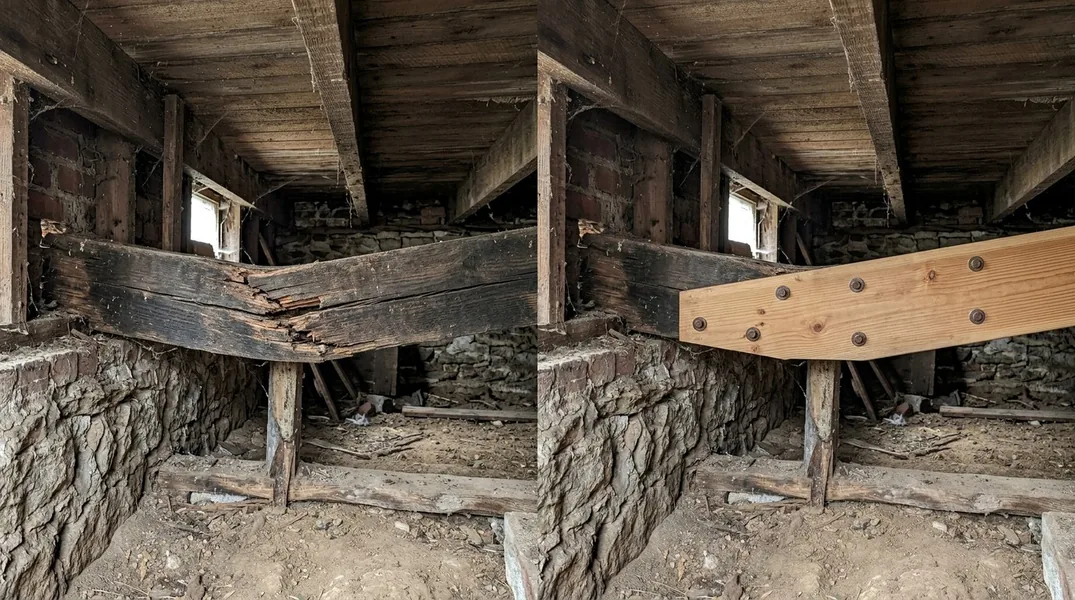
Structural carpentry in Pittsburgh often means working with framing that has settled over a century or more. A sloping floor in a 1910 rowhouse or a 1950s ranch is usually the normal condition here, not a sign of active failure. What matters is whether the member is still moving and whether the wood is sound where it carries load. Floor joist and subfloor repair ranges from sistering a joist alongside a weakened one to replacing a section of rim joist or sill plate. We assess each case on the wood itself and on whether the water source can be closed. Beam replacement and load-bearing wall removal are larger jobs that commonly require engineered drawings and a permit from the local building department. We build to those drawings rather than produce them. Beam sizing, header calculations, and load-bearing alterations typically need a licensed structural engineer, and we work with your engineer or can recommend one. The same applies to any alteration of a load-bearing wall: the engineer sizes the header and the beam, and we install it to spec.
Sticking doors, uneven floors, and cracks in plaster are part of the history of an old house in this region. The question is always whether the member is doing its job now, and whether the water source that caused decay or movement can be addressed. We explain what we find and quote both repair and replacement when both are honest options, so you can make the call with full information about cost and outcome.
Finish Carpentry and Built-Ins in Pittsburgh Homes
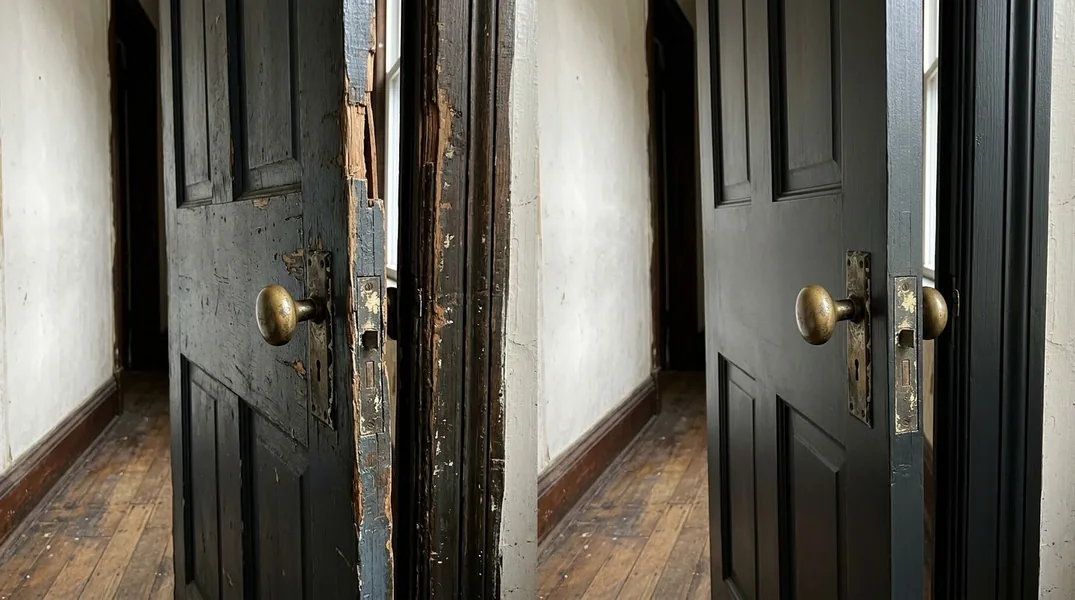
Finish carpentry in Pittsburgh homes means understanding the original character of the space and matching it thoughtfully. We install casing, baseboard, crown molding, and wainscoting with coped joints instead of caulked corners, and we scribe to walls that are neither flat nor plumb because that is the condition of houses built on steep hillsides and settled for decades. Crown molding and baseboard installation are most beautiful when the reveals are consistent and the profiles match the period millwork already in the house. Custom built-ins and shelving, cabinet and vanity installation, and interior door installation all require careful measurement and fitting because bay windows, compact floor plans, and out-of-square openings are the norm in Pittsburgh's older stock.
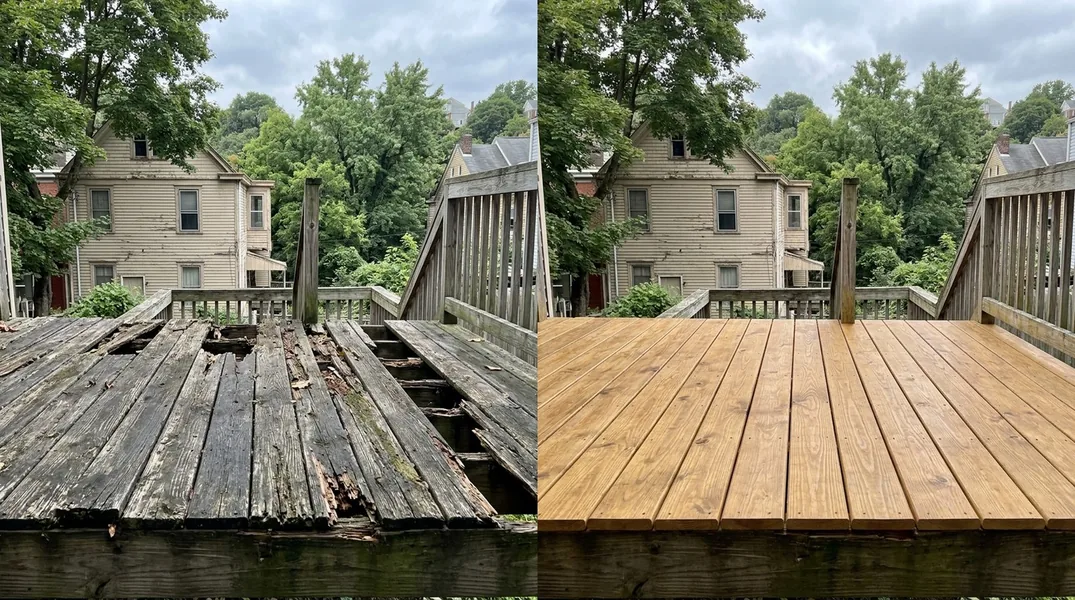
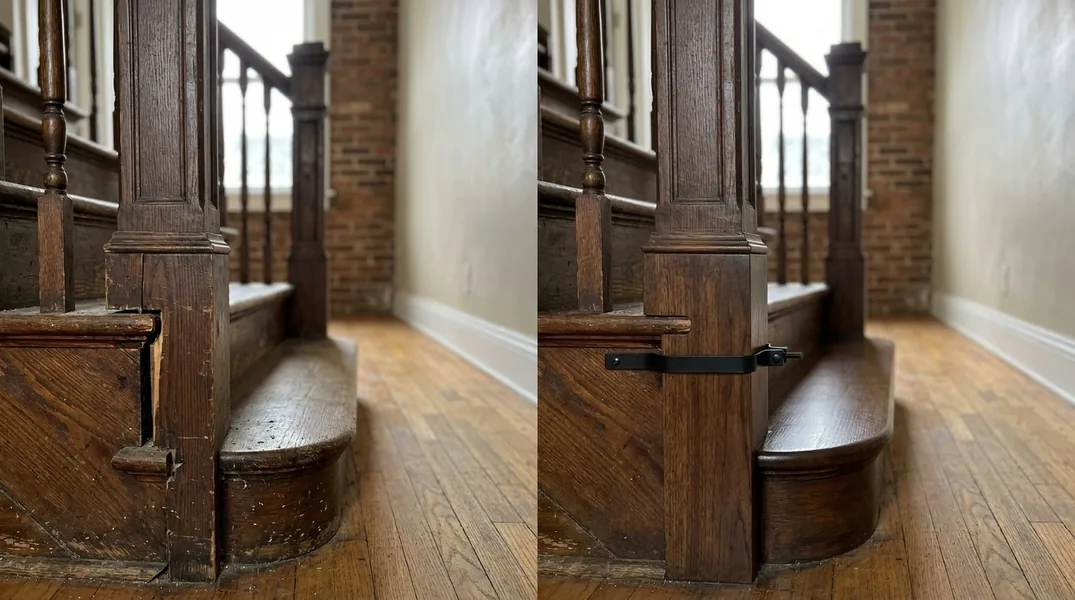
We also handle exterior and entry door installation, stair and railing repair, and deck and porch repair, where the same attention to fit and detail applies. A stair stringer that has settled or a railing that has pulled away from the wall is common in older homes, and repair is usually the right answer. The craft is in making the work look like it belongs in the house, not like it was added yesterday.
Permits, Repair-or-Replace & What We Do Not Do
Permits are commonly required for structural work such as removing or altering a load-bearing wall, replacing beams or joists, and repairing or replacing exterior decks and stairs. Requirements and thresholds vary by jurisdiction. In most cases, a permit is required before work begins, and the local building department will inspect the work once complete. We can explain what is typical, but requirements are set by your local authority, and you should verify them before starting your project. We are fully insured and build to code and to any engineer's drawings your project requires.
When you are deciding whether to repair or replace a damaged wood member, the honest criteria are simple: how much sound section is left, whether the water source that caused the damage can be closed, and what the two options cost to complete. We quote both when both are real options, and we explain the trade-off clearly. If you need to document damage for an insurance claim, we can help with that process. Requirements vary, and requirements for permits, engineering, and inspections change over time. Always verify the current rules with the Pittsburgh building department before starting your project. Call us for a free estimate and we will walk you through what your specific situation requires.